Home Blog Page 12

Aligning Energy Choices with Corporate Social Responsibility Goals

0

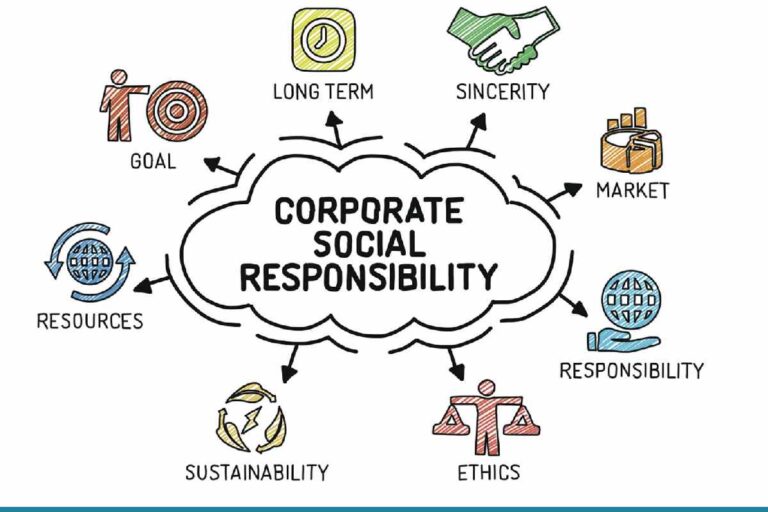
Corporate Social Responsibility (CSR) has become a cornerstone of current business strategy. It’s not just about philanthropy or marketing; it includes a range of actions that companies take to ensure their operations are ethical, sustainable, and beneficial to all stakeholders. A significant aspect of CSR is energy choice. This article explores the intricate relationship between energy choices and CSR goals, offering insightful perspectives for businesses aiming to balance profit with purpose.

The Importance of Energy Choices in CSR

The energy choices a corporation makes can have far-reaching implications for its CSR initiatives. From reducing carbon footprints to ethical sourcing, energy decisions affect various aspects of a company’s reputation and operational effectiveness. Adopting sustainable energy can also reduce long-term operational costs, providing both environmental and economic benefits.

Collaboration with Energy Providers

Another significant aspect of aligning energy choices with CSR is collaborating with energy providers and stakeholders. By building partnerships with renewable energy suppliers, companies can access customized energy solutions that meet their specific needs. Additionally, such collaborations can lead to joint innovation efforts, driving advancements in sustainability technologies and practices.

Tailored Solutions

For businesses looking to explore tailored energy solutions, https://TexasElectricBroker.com offers valuable services that can aid in finding appropriate energy plans tailored to corporate needs. This can complement broader CSR initiatives by ensuring energy sourcing aligns with sustainability goals.

Employee Engagement in Energy Initiatives

Employee engagement is fundamental for the successful implementation of energy-related CSR goals. Companies should educate and involve their workforce in sustainability initiatives, encouraging them to contribute ideas and practices that enhance energy efficiency. This not only helps in achieving CSR objectives but also fosters a culture of sustainability within the organization.

Renewable Energy: A Perfect Fit?

Switching to renewable energy sources such as solar, wind, or geothermal is often viewed as a definitive CSR strategy. Renewable energy sources provide a sustainable alternative to traditional fossil fuels, reducing greenhouse gas emissions and reliance on non-renewable resources. However, companies must consider the logistical and financial implications of such a switch, as not every renewable solution suits all operational needs.

The Role of Government and Policy

Government policies and regulations play a significant role in shaping corporate energy choices. By staying informed and compliant with evolving energy regulations, companies can ensure they align with national and international sustainability standards. Engaging in policy advocacy can also help businesses influence favorable regulatory changes that support CSR and sustainable energy adoption.

Energy Efficiency: The Unsung Hero

While switching to renewable energy is vital, improving energy efficiency often offers more immediate benefits. Energy-efficient technologies and practices can lead to substantial reductions in energy consumption and costs. This includes everything from upgrading to LED lighting and efficient HVAC systems to optimizing manufacturing processes and encouraging energy-saving behaviors among employees.

Case Studies: Learning from the Leaders

Several companies have successfully aligned their energy choices with CSR goals. For example, leading tech firms have invested heavily in renewable energy projects and have committed to carbon neutrality. By analyzing such case studies, other businesses can glean valuable insights and strategies for their own energy transitions.

Corporate Governance and Energy Policies

Effective corporate governance is important for aligning energy choices with CSR goals. This involves setting clear policies and frameworks that prioritize sustainable energy use. Companies must engage stakeholders, including employees, shareholders, and the community, in these policies. Transparency is key; regular reporting and assessments can help track progress and ensure accountability.

The Road Ahead

The relationship between energy choices and CSR goals is dynamic and continually evolving. Companies must remain agile and informed, keeping abreast of technological advancements and regulatory changes. Collaboration and knowledge-sharing within industries can drive collective progress, helping organizations achieve their CSR objectives more effectively.

Creative Approaches to Energy Management

Innovation plays a major role in bridging the gap between energy consumption and CSR. Smart grids, energy storage solutions, and advanced energy management systems enable companies to optimize their energy use dynamically. These technologies allow for better integration of renewable energy sources and improve overall energy resilience.

Conclusion

Aligning energy choices with corporate social responsibility goals is a multifaceted challenge, but it’s one that offers tremendous rewards. By making informed, strategic decisions on energy use, companies can bolster their CSR credentials, improve efficiency, and make a tangible impact on the environment. As we move towards a more sustainable future, the energy decisions we make today will play a pivotal role in shaping the world of tomorrow.

Information Theory The Big Idea Reading Answers – Detail Summary

0

What Does Information Theory Mean? Information Theory The Big Idea Reading Answers.

Information Theory The Big Idea Reading Answers – Information theory is an element of maths that defines theoretical and practical methods to exchange data. The main idea was deliberate by Claude Shannon, a famous mathematician. It has many options that can remain used in digitial technology to improve the firms’ business.

Web Tech Galaxy Explains Information Theory – Information Theory The Big Idea Reading Answers


Information Theory The Big Idea Reading Answers – Prior to information theory, electronic communication mainly was through analog transmission, which worked well enough in short distances. Still, it became problematic as the distances increased and signals degraded. Claude Shannon was an employee of Bell Labs (the research and development arm of the Bell Telephone Company) during the mid-twentieth century and worked on improving electronic communication during the Second World War to make it more efficient and secure.

Shannon’s research was eventually published in a book called “The Mathematical Theory of Communication” (co-written with Warren Weaver) and laid the groundwork for much of modern digital technology, such as the implementation of binary code.

A Gentle Introduction to Information Entropy – Information Theory The Big Idea Reading Answers


Information Theory The Big Idea Reading Answers Information theory is the main subject of mathematics-related with transferring data around the channel of contacts. The central concept of information theory is calculating how much knowledge is there in the message. Moreover, this can calculate the information in a function and random variable, called Entropy calculated using probability.

Calculating information and Entropy is a valuable tool in machine learning. It uses as the basis for feature selection, building decision trees, and, more generally, fitting classification models. As such, a machine learning practitioner requires a strong understanding and intuition for information and Entropy.

Information theory is the scientific research of digital technology’s calculation, storage, and communication. It was mainly established by Harry Nyquist and Ralph Harley in the 1920s and Claude Shannon in the 1940s. The concept is the union of probability theory, statistics, computer science, electrical engineering, mechanics, and information engineering.

Brief Information – Information Theory The Big Idea Reading Answers

The central aspect in the information theory is Entropy. It calculates the number of problems involved in the number of a different variable or the out result of the process. For example, the two sides of a coin reprise one side as lower Entropy. Some other vital steps in information theory are compatible. Necessary fields of information theory contain source codes, algorithms, algorithmic information theory, and information security.

Apps of fundamental points of information theory contain lossless data compression, lossy data compression, and channel coding. It will mainly affect the success of Voyager missions to deep space, the launch of compact discs. The advantages of mobile phones, and the growth of the Internet. The information theory has also been found helpful in other fields such as statistical inference, cryptography, neurobiology, perception, linguistics, the evolution and function of molecular codes.

What is the Importance of Information Theory?

Information Theory The Big Idea Reading Answers Mind-expanding theory allows grasping the concept of information as quantum particles and discussing theories of rates and means of transmitting information at accelerated velocities, which entails a higher degree of noise.  Moreover, the mere idea that it is possible to calculate how information transmission rates correlate with increased noise levels is staggering. Claude Shannon’s invention of information theory made the electronic revolution since the 1940’s possible. It is also what made Stephen Hawking’s remarkable research (“The Information-Loss Paradox”) on Black Holes fascinating. The idea that ‘information is something that resists Entropy is a massive stroke of genius.


Tech Innovations That Empower Entrepreneurs

0

Tech Innovations That Empower Entrepreneurs

Tech Innovations That Empower Entrepreneurs-The entrepreneurial journey is both exhilarating and daunting. In recent years, technological advancements have become a crucial ally for entrepreneurs, enabling them to innovate, scale, and compete in the global market. This article explores several groundbreaking tech innovations that are empowering entrepreneurs in ways previously unimaginable, reflecting the dynamic interplay between technology and entrepreneurship.

Cloud Computing: The Backbone of Modern Businesses

Gone are the days when substantial financial investments in IT infrastructure were a barrier for startups. Cloud computing has democratized access to enterprise-level technology, allowing entrepreneurs to leverage scalable resources, such as storage and computing power, on a subscription basis. This shift not only reduces upfront costs but also enhances collaboration and flexibility, enabling businesses to thrive in an ever-changing digital landscape.

Internet of Things (IoT): Smart Solutions for Businesses

The Internet of Things connects everyday objects to the Internet, enabling them to collect and exchange data. For entrepreneurs, IoT presents an opportunity to develop smart solutions that enhance efficiency and offer innovative services. Whether it’s optimizing resource use in manufacturing or creating new customer experiences in retail, IoT technology is at the forefront of driving business innovations.

Advanced IT Support

In the rapidly evolving world of technology, staying abreast of the latest IT solutions and support services is crucial for entrepreneurs. Houston IT services cater to this need by offering a range of managed IT services, ensuring that businesses can operate smoothly and securely while focusing on their core objectives without the added stress of managing their IT infrastructure.

Augmented Reality and Virtual Reality: Enhancing Business Operations and Customer Engagements

Augmented Reality (AR) and Virtual Reality (VR) are reshaping industries by offering immersive experiences and new ways to engage with customers. Entrepreneurs can utilize AR and VR for product demonstrations, virtual tours, and enhanced training experiences, bridging the physical and digital worlds in a way that captivates and informs consumers and employees alike.

Big Data and Analytics: Unlocking Insights and Opportunities

In the age of information, the ability to harness data holds the key to competitive advantage. Big Data and analytics tools empower entrepreneurs to decipher vast amounts of information, revealing patterns, trends, and insights that drive smarter decision-making. This technology has transformed various aspects of business, from optimizing operations to understanding customer preferences and predicting market trends.

Artificial Intelligence and Machine Learning: Personalizing Customer Experience

Artificial Intelligence (AI) and Machine Learning (ML) are no longer the exclusive domain of tech giants. Today, these technologies are accessible to entrepreneurs, enabling them to offer personalized experiences and automate complex processes. From chatbots that improve customer service to AI-driven analytics that offer deep market insights, these tools are revolutionizing the way businesses interact with their clients and understand their markets.

5G Technology: Accelerating Connectivity and Innovation

The rollout of 5G technology promises to revolutionize business operations with ultra-fast speeds, lower latency, and higher capacity. This leap in connective capabilities enables entrepreneurs to implement more IoT devices, facilitate seamless communication, and support real-time data analysis, paving the way for innovations that were once deemed unfeasible.

Blockchain Technology: Building Trust and Transparency

Blockchain is often associated with cryptocurrencies, but its implications for entrepreneurs extend far beyond. By enabling secure, transparent transactions, blockchain technology offers a new paradigm for trust in business. For startups, this means the ability to verify the authenticity of products, secure digital identities, and execute contracts without intermediaries, opening up a realm of possibilities in sectors like finance, supply chain management, and digital rights management.

Quantum Computing: Solving Complex Problems at Unprecedented Speeds

Quantum computing holds the promise of tackling complex computational problems that

are beyond the reach of current technologies, offering new horizons in optimization, materials science, and cryptography. For entrepreneurs, the advent of quantum computing could revolutionize fields like drug discovery, financial modeling, and climate simulations, offering a competitive edge in problem-solving and innovation.

Cybersecurity Innovations: Safeguarding the Future of Business

In an era where digital threats loom large, cybersecurity is not just a necessity but a strategic investment. Innovations in cybersecurity are empowering entrepreneurs to protect their intellectual property, customer data, and digital assets. In fact, from advanced encryption methods to AI-driven threat detection. These technologies provide the shield businesses need to operate safely in the digital domain.

Final Thoughts

The interplay between technology and entrepreneurship is dynamic and ever-evolving. The innovations highlighted above are just the tip of the iceberg, reflecting the vast potential of technology to empower entrepreneurs. As the digital landscape continues to evolve, so too will the tools and technologies at the disposal of enterprising individuals. By embracing these innovations, entrepreneurs can not only overcome. The traditional barriers to entry but also redefine the boundaries of what’s possible in their industries.

Also Read:

Monitor Write For Us – Guest Post

Genetics Technology Write For Us

What are the Purposes of the Marketing Department?

0

Companies in the tertiary sector that care about their customers look for a way to solve their problems or needs in a satisfactory way. Therefore, companies must assess the environment before designing and Advantages of using marketing plan template the product or service, and then find ways and means to attract customers. Marketing Department. That is to say, Digital marketing is the strategy to make your products or service successful.

This is only possible by focusing the functions of the marketing team, which is responsible for the development of sales strategies that help companies to position themselves in a profitable place in the market, making themselves known, improving the offer, increasing sales and profits. , optimize resources and, above all, make customers loyal to the product or service.

The Importance of the Marketing Department

Imagine what a company would be like without a team in charge of satisfying the requirements and needs of the client. Obtaining profits would certainly not be the same. For this reason, the marketing or marketing department has the task of communicating the value of a product, service or brand to a certain segment of the public to direct the fulfillment of a final objective: that of promoting or selling that product, service or brand.

Today, that business that has a marketing department (either internally or externally) has the possibility of innovating. You will get the benefit of creating new names and trademarks, as well as planning new product or service presentations.

This department is the only one capable of gathering data, factors and facts that influence the market to create what the consumer needs with research.

1. Market and Competition Research

The first investigation consists of gathering the necessary information about the market regarding the product. The distribution and the means of communication that will be used for its promotion. The needs of consumers are analyzed, such as their preferences, tastes, desires, habits and customs. It is in this phase that marketing experiments are developed and carried out, such as market studies with instruments to probe the needs of consumers, or create new consumer needs.

The second investigation will be to know what a product is for or how a service works. What are its areas of opportunity, what promotions it offers when acquiring it, and for how long.

2. Planning and Development of Marketing Strategies

Professionals in the area must carry out marketing planning that consists of developing or formulating strategies that allow achieving the objectives proposed by the company.

During development, it will be necessary to have control over the activities so that they are implemented as specified in the plans and in the indicated times; either in the short, medium and long term.

3. Sales Promotion

Inform consumers about the company’s products or services, encouraging them to purchase them. It can be done using all or any of the following methods: by digital advertising, physical form advertisements. Personal sale or special promotions in certain places or media.

4. Communication

The last function, but just as important, has to do with the dissemination of the sales promotion that involves the communication of the target audience and customers. Establishing communication with prospective clients through the means of communication that are most effective for this purpose is of greater importance; being congruent with the characteristics of the products or services offered and with the values ​​of the brand.

The marketing professional will find the means and, mainly.

5. Enable the Smarketing Process

At HubSpot we have been implementing and improving a smarketing process which has helped us raise the level of the relationship between the marketing and sales departments. Since companies that have implemented this strategy manage to close  67% more deals and reach up to 209% higher revenues , it was worth a try. But what is the role of the marketing department in all this? Let’s see:

1. Captivate the Audience

The main role of the marketing team within the smarketing processes is to attract and captivate. Although you will always seek to attract more people, you should not make random efforts, but strategic ones to reach the audience that your brand wants to fall in love with.

Thus, the marketing team seeks visibility against the competition and their potential buyers.

2. Boost Interactions

The marketing team has to define and create, together with the sales team, the buyer person. Which will be essential to know who they want to attract.

The marketing department creates content specifically focused on a community and speaks to it in such a way that the audience connects with the brand. Encourage interaction to move the people who make up your audience. It also multiplies digital channels. Giving you more points to attract potential customers, which is an essential task to help the sales team.

3. Communicate all the Time

The marketing team maintains communication all the time with users and their audience (visitors, leads, prospects and customers).

Create content, plan and carry out different strategies; nourishes each digital environment with the message of the brand and with the materials that will lead to converting visitors into customers.

Thus, it is vital that there is a two-way communication to know who you want to reach and where. Tracing the buyer’s journey.

4. Guide the Leads

All content and marketing efforts are intended to communicate and, as a consequence, to attract. Of course.

In this role. The marketing department tends to provide value to leads and generate solutions that ultimately translate into sales pitches.

5. Continue to Amplify Opportunities

Since the marketing department always tends to make the most of all its digital efforts through all the channels where it operates: social networks, digital guidelines, SEO, among others. By creating more and more opportunities by optimizing different strategies digitally. The process becomes similar to a relay race in which the marketing team passes the baton to the sales area.

Also Read : Creative Development, Definition, Characteristics, And More

Helpful Resources:

What plan to the Web Business Plan – Full Summary

What Are The Benefits Of Website

0

Digital marketing is the strategy currently used by large and small companies to make themselves known, attract customers, retain those they already have, promote a new product, etc. Benefits Of Website

Why has this strategy become so popular? The answer is simple, for all the Benefits of using content calender template. Benefits of digital marketing, which have surpassed those of the traditional one. Here are some of them

Digital Marketing For Companies Of All Sizes

In the digital world, we all have the same tools for advertising, and although there is a noticeable difference in budgets, transnational companies to small family businesses can achieve excellent results.

It creates the possibility that any company, even the smallest, can enter the competition as large corporations at a similar level.

The best-known brands will find it easier to spread their message on the web. companies to make themselves known, attract customers, retain those they already have, promote a new product, etc. Benefits Of Website

Digital marketing allows better communication with customers

The Internet and, more specifically, blogs and social networks will enable you to establish a closer relationship with your followers or customers.

The benefit is for both parties: companies can generate more significant commitment, loyalty and can have feedback on what customers think of their products or services; On the other hand, the followers of the brand will have the possibility to see their doubts and concerns satisfied. Obtaining a better service from the company.

With all this, it will remain achieved that there is greater confidence towards the brand or company, especially if this remains added to the positive comments from other customers and the number of times they share the message, recommending the product.

The costs are not that high

Another benefit of digital marketing is that. In general terms. The investment required to implement it is much less than that required for a traditional marketing strategy (print advertising, radio or television ads, etc.). companies to make themselves known, attract customers, retain those they already have, promote a new product, etc. Benefits Of Website

But it is not only this but also the results can be much more successful.

Everything can remain measured. Always. In real-time.

An advantage that you will not find in traditional marketing is the possibility of knowing in real-time the success that your digital marketing campaign is having. Which allows you to make changes in the strategy used to improve it on the fly. And different metrics that can get the number of clicks. And conversion rate even returns on investment between other things.

So, with this type of marketing, you can have a more exact idea of ​​the effectiveness of the advertising campaign. Contrary to what happens with traditional media in which only estimates can complete.

Reach more people

Thanks to the possibility for users to share content that they find interesting. Digital marketing can get a message to thousands of people in a faster and cheaper way than in traditional media.

Better segmentation

Digital marketing allows you to more precisely define the segment of the population to which you want to target the campaign. The message will reach those who want it to get the people who may be most interested in the product or service that is existence promoted.

Of course, for this to happen. It is essential to have created a specific profile of the target customer. Taking into account their demographic characteristics, interests, needs, or any other characteristic.

It is essential to take advantage of mobile platforms

These days it is rare that the person who does not have a smartphone, from which. In addition to sending and receiving calls and messages, is used to surf the Internet and download different applications.

With the popularity of cell phones, the options for action increased. Making it possible to reach anyone, at any time, without the need for them to be at a computer. Digital marketing strategies can take advantage of this very well and reach your target audience more directly.

Also Read : Business Education – The Importance Of Business Education

What Is A Brand Strategy? Defination, and More

0

Branding strategies make it possible to turn a brand into a strong brand. It must be positively remembered by consumers to increase its long-term value. To this end, the brand strategy provides guidelines that should guide the marketing mix of a company.

The brand strategy formulates the bases, while the marketing strategy applies them operationally. Therefore, a brand strategy is designed for the long-term and future-oriented.

Brand strategy

The goal of a company’s brand strategy should be that customers always choose the brand in question, even in intense competition. Therefore, a branding strategy must ensure long-term customer loyalty. To make this happen, you have to use Good customer relationship management software. This article explains how companies can develop a brand strategy, what crm systems exist, and what to consider when creating them.

Develop brand strategy

The planning and execution of a brand strategy are usually scheduled for an extended period, three to five years. The following circumstances consider to be reasons for developing a brand strategy:

  • A company launches a new product and considers how it should be market.
  • These revolve around market intelligence, brand identity, brand positioning, and the creation of brand rules.

Market intelligence: market and consumer research

Market intelligence refers to exploring the brand’s environment, both internal and external. First, the target group and market demand are examine in more detail. If the brand has been around for a long time, it is advisable to evaluate its perception by customers.

Once the needs of the target group have been identifie, competitive analysis is performed. The market environment must be consider. The goal is to identify all influences on the brand, whether political, social, or economic.

Create a brand identity

The next step is to develop the internal value proposition: What can the brand offer, and what does it represent?

First, it is about highlighting the internal values ​​of the company and the essential characteristics of the brand to create a brand identity. These, as well as the corporate design, are first applied internally. They can then be brought to market as part of a branding strategy.

Define brand positioning

Based on the identity and perception of the brand, the brand positioning is developing. The objective is to stand out from the competition and position the brand in the consumer’s mind. The clearer it is, consumers will remember, the more likely the brand.

Apply the brand strategy

After the theoretical planning of the brand strategy, it is about implementing it. It is essential to use all the channels available to bring the brand’s message to the market. In addition, you have to make sure that the branding strategy is integrate into the employee workflows.

Evaluate the B.S

Various metrics can determine the effectiveness of a brand strategy. These include, for example, the following:

  • Conversion rates for landing pages on the web
  • Engagement rate on social media channels
  • CRM email open rates
  • Sales numbers

In addition, since the market is constantly evolving, the brand strategy must continually adapt.

The different B.S

Branding strategies differ according to the type of competition the company has to face. We highlight the following types:

  • Horizontal competition: Competitors that meet the exact needs of customers with similar or identical products/services.
  • Vertical competition: Competitors that meet the same or similar customer needs with other products/services.

Next, we expose you models of brand strategy applicable to the horizontal competition:

Individual BS

The individual bs  creates its own identity and image for each of its products. This strategy is often use when a manufacturer or supplier offers several heterogeneous products.

Example: Ferrero with brands like Nutella, Mon Chéri, or Kinder.

Multi-B.S

In the multi-brand strategy, several brands use for each type of product of a company. Therefore, there are several brands in the same product area. Can lead to brands competing with each other and cannibalizing each other.

Example: Unilever with Cornetto and Magnum.

Unique B.S

This type of strategy puts the company in the foreground. As a result, marketing and advertising costs are lower than with other marketing strategies.

Example: Coca-Cola

What is a good B.S?

For a bs to be sustainable and prosperous, these aspects must be taken into account:

  • The value proposition must be part of the brand’s strategy.
  • The bs  must be orient towards the competition.
  • Marketing activities must be in line with the brand’s strategy.

Creative Development, Definition, Characteristics, And More

0

Creative Development

“With this work, I intend to approach the subject of creativity by distinguishing, analyzing the characteristics of the invention. Creative Development

Trying to describe guidelines for its development and we try to reflect on the idea that creativity is a resource of intelligence characteristic of each being human, which is capable of being developed in the same way. ”

Introduction

For ages, the thought prevailed that only extraordinarily original people are creative and that creativity was a gift from heaven.

Potentially all human beings are capable of creating. If anyone denied the creative strength of man, it would suffice to refute it to refer to the universal phenomenon of children at play. It is what we know as Symbolic Game.

1. Definition of Creativity

Throughout history, there have been definitions of creativity that been given, from which we can generalize by saying that:

-Creativity is a feeling of freedom that allows us to live in a state of permanent transformation.

-Creativity in science, art, and living is how the need to give birth to something new is express.

-It is the ability to find new and unexpected connections.

In Psychology, the following attributes are attributed to him: Originality, Flexibility, Viability, Fluency, and Elaboration. (Menchen, Dadamia and Martínez, 1984)

Suppose we want to specify what was initially said in a single definition. In that case, we could say that creativity is the ability to conceive something new, relate something known in an innovative way, or depart from habitual thinking and behavior patterns.

2. Characteristics of Creative Development

Some people are indeed very creative, and others are very routine. Analyzing the characteristics of thought can clarify the dynamics of creativity and why different degrees of creativity exist in different people.

Next, we will analyze the essential factors or characteristics, which Menchen describes; Dadamia and Martinez, 1984:

-Fluency:  ease of generating a large number of ideas on a given topic. The way to promote it in the school field would be, for example, asking the student to relate between facts, words, events,

-Flexibility: It is born from the ability to method problems from different angles.

An example of working on it would be giving the student different scenes from stories, altering the order, and inventing other stories.

Originality is a characteristic that defines the idea, process, or product as something unique or different

—producing

witty or infrequent responses. Within the school environment, it is promot by stimulating the new ideas that the student proposes.

-Elaboration is the level of detail, development, or complexity of creative ideas. The student is present with picture story illustrations in which they have to notice the details.

-Viability:  ability to produce ideas and solutions that are achievable in practice.

The first three factors – fluency, flexibility, and originality – are Divergent or Lateral Thinking functions, which acts as an explorer going on an adventure. It is the one that does not stop with a single answer to a problem. It is the free association of ideas and images. is the restructuring of the distinguished in a new way. In short, it provokes creativity.

On the contrary, the so-called Convergent Thought is the one that evokes ideas and tries to chain them to reach an already existing and concrete point, although this is dark for the subject.

3. Creative Process

Creativity is a process that ends with the creative solution of a problem. During the process of solving the problem, techniques could develop our creative potential, facilitating finding the appropriate solution. These problems could be fragmented into the following stages:

– Perception of the problem: it is necessary to discover or perceive that there is a problem. There are exercises to exercise and train sensitivity to problems, where we try to produce as many questions as possible about a given situation.

– Definition of the problem:  The different enunciation of the problem stipulates different situations. Here we work with preparation before addressing the problem so that the ability to reformulate the problems.

Rain of  Ideas:  They train with methods and techniques that provide increased ideas or further elaboration.

Valuation of ideas: It is convenient to delay this phase or separate it from the idea production phase in the creative process.

4- Development of Creativity at School

To promote the development of creativity within the school framework, we find a series of activators proposed by Lopez and Recio (1998, p.53) that consider three fundamental factors in the child’s formation: cognitive, affective, and social:

Attitude to Problems:

-Make sure that the problems that the students face have a meaning for them.

-Motivate students to use their creative potential.

-To make them aware of the importance of using creativity in everyday life.

-Stimulate their curiosity and invite them to analyze problems from different perspectives, as well as redefine them more appropriately.

The way to use the information:

-Emphasize the importance of applying knowledge and not just memorizing it.

-Stimulate the participation of students to discover new relationships between the problems of situations raised. All the strategic systems must be followed.

-Evaluate the consequences of actions the ideas of others, present an open attitude concerning these ideas and promote the search and detection of the critical factors of a problem.

Also Read : What is Customer Relationship Management (CRM)?

SEO: How to Find Keywords to Use and Where to Add Them

0

In the field of digital marketing, search engine optimization is the ultimate priority for many people. You need to be knowledgeable of the things that will make your business successful. In case you are not aware, keyword research is the first and most important aspect of your SEO strategy. Before you begin creating and writing content for your website, you must identify the significant keywords and what are the suitable high-volume search terms out there. Each company would focus on different keywords based on the product or service they provide. Keywords used by a financial service company like Velocity Investments LLC would drastically differ from the keywords used by a tech company like Apple. By knowing these significant keywords, you will also analyze where you must add them. You must take advantage of digital marketing to boost your sales and profit as much as possible.

SEO: How to find keywords to use

Understanding the importance of SEO is one way to achieve success in online marketing. Another is to figure out how to find the right keywords to use for your business website. Here are some:

Search related keyword results on Google

In a very simple technique, you can find related keywords using Google search. You will just search for your primary keyword to look for the searches related to your term. The good thing is that Google provides a list of results that can guide people to search words or phrases that will let them get closer to the information that they are looking for.

Related article

When you are searching for a term, you can see searches that are related to your term in the related searches sections located at the bottom of the page. You can also search for related articles that can help you figure out significant keywords that you can use for your business website.

Free keyword tools

If you want to perform analytical keyword research, you can use free keyword research tools to expand on your concepts and ideas to help you find even more keywords. You just need to understand how keyword research tools work to get the most out of them.

Where to add keywords

As soon as you are able to figure out what are the significant keywords for your business website, it is time for you to understand where to add them. This might be a hard task for newbies in understanding SEO. The good thing is, you can outsource your SEO tasks and let specialists help you in strategically placing keywords. Here are some locations where to add keywords:

Article Title

The best place to add keywords is in the article title. It is the first one that people usually recognize. It is effective to include relevant keywords in the title of every article or blog that you are writing.

Meta tag description

A meta description is an HTML element that provides a brief summary of a web page. It is good to include keywords in them to give users an idea of the content that exists within your page.

Subheading

A subheading is a text written below the main title. It adds information about the headline and it is usually printed in a smaller size than the heading but larger than the text that follows. You can choose to include your keywords in here to effectively communicate your content.

Link anchor text

Link anchor texts are the visible characters and words that hyperlinks display when you are linking to another document. They usually appear as blue underlined text. You can add keywords to them to help you understand where to put relevant keywords on your website.

Image alt text and description

You can also include keywords in the image alt text. It is the written copy that commonly appears in place of an image on a webpage if only the image fails to load on a specific user’s screen.

Summary

In the end, we can discuss in summary that SEO is inevitable when you are utilizing digital marketing. No business owner can succeed without performing good SEO tactics for their online marketing. It is best for you to consider keywords research. You need to find the significant keywords to use and you need to locate where you must add them. Don’t ever forget to perform such actions for you to see how much your business can grow in less than an amount of time.