
Home Blog Page 6

Mobile Testing Demystified: Tools, Techniques, and Trends

0

Mobile applications have changed how businesses connect with people. Testing these apps is important to ensure they work well, are easy to use, and meet users’ wants. With apps getting more complicated, testing them is a must-have, not just a choice. Mobile app testing covers a lot of factors, including how effective they are and the ease with which one can use the apps. Another point to take home is that it does not matter whether you are developing apps for iPhones, Andriod, or both – testing guarantees the user a smooth run and prevents problems from reaching the user. Tools like Appium are handy for developers and testing teams to automate their work efficiently.

This blog guide to testing mobile apps explains a few tools, methods, and trends. It will cover the basics of mobile app testing, show how to use Appium to automate your testing, and share top practices used in the industry. It will also discuss what’s coming next in making mobile apps so you can be ready.

The Basics of Mobile Testing: Why It Matters

Ensuring a mobile application works well on different devices, OS versions, and network environments is crucial. It involves checking if the app functions properly, is easy to use, and looks consistent, considering challenges like various screen sizes, OS versions, and user habits.

Testing mobile apps is vital due to the wide range of devices available. Unlike websites that work similarly across browsers, mobile apps must adapt to different hardware and software setups. Inadequate testing can lead to crashes, bugs, or slow performance, resulting in negative user feedback and loss of customers.

Mobile testing is also important for meeting industry standards and regulations. Additionally, testing mobile apps can boost user retention. A well-tested app that provides a smooth user experience builds trust, encouraging users to interact more with the app. Businesses that invest in robust testing tools like Appium often see better returns on their investment as their apps perform well in competitive markets.

This initial testing phase in app development ensures quality is maintained, reducing the need for costly fixes after the app is launched. With the increasing use of mobile apps, understanding the significance of mobile testing is key to keeping your projects successful and on the right path.

Mobile Testing Tools: The Essential Arsenal

Mobile testing tools are very important in ensuring that applications always perform consistently and are of high quality across different devices, operating systems, and network conditions. With so many tools, selecting appropriate tools is critical to ensuring efficient and comprehensive mobile application testing. Each tool has different capabilities, strengths, and specializations, so it is essential to know its features and best use cases.

Appium: The Cross-Platform Leader

Appium is an open-source mobile testing tool that is highly effective, flexible, and can work cross-platform. The tool can work with both combined applications for Android and iOS, as well as applications on one or the other. It’s worth mentioning that the most critical advantage of Appium is that a tester writes only a single test script that can be run across different platforms.

Its complete open-source interface integrates easily through well-known programming languages such as Java, Python, and Ruby, ensuring that such integration reaches the largest possible number of developers. Still, the open-source nature with robust community support has well-ensconced Appium into a robust preferred automated mobile testing.

Selenium for Mobile Browsers

Selenium is designed for web applications but can be used for mobile browser testing. It is very useful for ensuring seamless experiences on mobile web platforms. The Selenium Grid allows for parallel testing, ensuring efficiency when dealing with multiple browser configurations.

Testing native XCTest and Espresso

XCTest (for iOS) and Espresso (for Android) are go-to tools for platform-specific requirements. XCTest is Apple’s official testing framework, offering deep integration with Xcode to deliver robust performance testing for iOS applications. Espresso, by Google, is known for its speed and simplicity in creating automated UI tests for Android applications.

Calabash: Behavior-driven testing

Calabash supports behavior-driven development by integrating into Cucumber. This makes it particularly useful for teams that prefer their test cases written in simple language, thus bridging the gap between technical and non-technical members.

Cloud-Based Platforms

Cloud testing tools like BrowserStack and Sauce Labs give a wide range of devices and operating systems access without physical hardware. They both support automated and manual testing, essential for teams needing scalability and convenience.

Automation in Mobile Testing

The rapid pace of mobile application development needs testing solutions that are both efficient and reliable. Automation in mobile testing has emerged as a transformational approach addressing the inadequacies of manual testing by allowing faster, more accurate and scalable processes. By leveraging automation tools and frameworks, developers and QA teams ensure consistent application performance across various devices, operating systems, and configurations.

Why Automation Matters in Mobile Testing

Manual testing is both time-consuming and prone to human error. Automation allows teams to run repetitive test cases without delay and human error as quickly and consistently as possible, thereby minimizing the occurrence of oversight.

Especially in mobile app development, the diversity of devices and platforms can make comprehensive testing difficult. Automated testing proves to be a reliable mechanism for ensuring broad coverage without dramatically increasing the time and effort involved.

Key Benefits of Mobile Testing Automation

Automation in software testing brings forth numerous advantages:

  • Efficiency: By conducting multiple tests concurrently, automation expedites the testing process, proving especially beneficial for evaluating expansive applications across diverse devices and configurations.
  • Accuracy: Automated tests significantly diminish the chances of human error, guaranteeing consistent and trustworthy outcomes in every testing iteration.
  • Scalability: Automated frameworks can manage extensive testing demands, encompassing testing on multiple devices, thus assuring the app’s optimal performance on various platforms.
  • Integration with CI/CD: The seamless integration of automation with Continuous Integration/Continuous Delivery (CI/CD) pipelines ensures that tests are seamlessly triggered with each code alteration, offering immediate feedback to developers for swift adjustments and enhancements.

The Role of Tools Like Appium

Appium is among the most frequently used tools for mobile testing automation that supports cross-platform capabilities, i.e., iOS, Android, and hybrid applications, allowing one to write and execute a single test script on any platform. It is an effective solution for teams of any size due to its capability of integration with various programming languages and frameworks.

Best Practices for Effective Automation

  • Define Clear Objectives: Describe what test cases will be tested and which will provide the most payback for automation.
  • Create Reusable Scripts: Devise a modular, reusable script that can easily be adapted to other future testing needs.
  • Combine Manual and Automated Testing: Allow repeat and regression testing automation, but use only manual exploratory and usability tests.

Mobile testing automation is a game changer, enabling faster delivery cycles, improved accuracy, and enhanced app quality. By adopting the right tools and practices, teams can harness their full potential to create exceptional mobile applications.

Appium Tutorial: Automating Mobile App Testing

Appium is the latest and most used tool in mobile app testing. It is an open-source framework used to automate the testing of native, hybrid, and mobile web applications. This software supports both Android and iOS platforms. Appium adheres to the “Write Once, Run Anywhere” philosophy, providing cross-platform reusability. Thus, the same script is reused for all mobile applications. It utilizes the WebDriver protocol to communicate with a mobile device. That’s why it can quickly adopt most programming languages such as Java, Python, Ruby, etc.

Installation of Appium

  • Install Node.js since Appium is based on it.
  • Install JDK and set up the JAVA_HOME environment variable.
  • Download Android Studio for Android testing or Xcode for iOS testing.

Setting Up the Environment:

  • To set up Android testing, use the ANDROID_HOME environment variable to point to the directory of the Android SDK.
  • You have to set up Xcode for testing on iOS and ensure that the iOS simulator is available.

Creating Your First Test Script

  • Pick a language compatible with Appium (like Java and Python). Download the appropriate Appium client library for your language.
  • Create your Test Script:
  • Import in WebDriver and Appium libraries.
  • Set the capabilities you want, such as device name, platform version, and app location.
  • Example (in Python):

Running and Debugging Tests:

  • Start the Appium server via the GUI or command line.
  • Run the test script from your IDE or command line.
  • Tune in the application logs in the Appium console to identify issues.

More Advanced Usage and Integration:

  • Parallel Testing: Use Appium Grid to run multiple parallel tests across various devices.
  • CI/CD Integration: Integrate Appium with Jenkins or GitHub Actions to automate testing through your CI/CD pipeline.
  • Custom Scripts: Write your framework for testing with custom libraries like TestNG or Pytest.

Emerging Trends in Mobile Testing

The mobile testing is always changing. Keeping up with trends will ensure that your testing strategies are relevant and effective:

  • AI-Powered Testing: AI in software testing is added to testing frameworks to predict defects, generate test cases, and optimize test execution.
  • Cloud-Based Testing: LambdaTest enables testers to access virtual devices without physically purchasing hardware.
  • Shift-Left Testing: Integrate testing at earlier stages in the development cycle, which would help find and fix issues quickly.
  • Impact of 5G: New parameters must be tested, including ultra-low latency and high-speed data transfer.
  • Testing for IoT: IoT testing has expanded from the smartphone to the overall IoT ecosystem.

Knowing and keeping track of these trends will keep your mobile app testing approach complete and up-to-date.

Mobile Testing with LambdaTest

LambdaTest is a cloud-based solution for easy testing of mobile apps as it grants access to over 3000+ real devices and OS versions. Therefore, a team can conduct cross-platform testing for their mobile apps on various configurations without requiring hardware equipment.

Testers can test native, hybrid, and mobile web applications in manual and automated tests with LambdaTest. It also supports integration with popular tools like Appium and Selenium, making it a versatile choice for testing. Other features include live testing, responsive testing, and detailed debugging logs to facilitate smooth testing.

It also allows application testing on various real-time network conditions, ensuring apps perform flawlessly under different conditions. LambdaTest scalability and usability make it very valuable for developers and QA teams working towards delivering bug-free mobile applications with high quality in the most efficient way possible.

Conclusion

Mobile testing is an integral part of the application development lifecycle. Developers and QA teams will ensure quality applications if they utilize tools like Appium, adopt automation, and stay attuned to the latest trends. Effective mobile app testing minimizes risk and provides higher user satisfaction, the key to long-term success.


Why is Deep Learning meaningful?

0

What is Deep Learning?

deep learning

Deep learning is a special method for information processing and a sub-area of machine learning and artificial intelligence. Deep learning uses neural networks to analyze large data sets. This functionality used by deep learning acts in a similar way to the human brain. In doing so, data is first extracted, then analyzed in order to subsequently draw up a conclusion or prognosis. In practice, deep learning is mainly used to recognize images, understand texts or for better decision-making.

The basis of deep learning, neural networks, has been around since the early 1940s and is not a new topic. However, big data and the growing computing power (through graphics cards) are rapidly gaining attention. Deep learning solves problems that cannot be solve without these approaches.

DL is highly computationally intensive. The training can last for months to be able to make good predictions and decisions. The reason for this is complex architectures and millions of model parameters.

What is the association between Deep Learning and artificial neural networks?

Artificial neural networks are algorithms that are model on the biological model of the human brain. It is use to recognize patterns, interpret texts, or help us form clusters and classify objects on images.

Of course, a DL algorithm becomes like anyone machine learning algorithm trained on data. Artificial neural networks are often very complex, which interprets individual decisions as challenging to understand.

Why is D-L meaningful?

There are problems, such as unstructured image and text recognition or the development of recommendation systems in marketing, which can be map particularly well with neural networks. It is where artificial neural networks show their strengths.

The more significant the amount of data, the better profound learning works.

A good example is speech, text, and image recognition.

But structured data can also be processed well with neural networks, especially when a lot of data is available.

Big data technology and the steadily growing amount of data play a decisive role in the success of these approaches. Without big data, neural networks often work worse than classic machine learning, as the following diagram by the renowned DL expert Andrew Ng clearly shows.

What is the difference amid Deep Learning and Machine Learning?

What is the difference amid Deep Learning and Machine Learning_

Deep learning is a subsection of machine learning, so deep learning is always machine learning. However, it is worth taking a earlier look at the capabilities of these two types of machine learning, as both have different properties.

To better delimit the terms, we subdivide them into DL and “classic” machine learning. Classic machine learning refers to the methods that do not use artificial neural networks. Deep understanding, on the other hand, only uses artificial neural networks.

Thus, the main difference between DL and classic machine learning lies in processing unstructured data through artificial neural networks (ANN).

Artificial neural networks can convert unstructured information such as text, images, sounds, and videos into numerical values.

Is Deep Learning Overrated?

The question of whether DL is overrated is easy to answer: no.

Today, problems can be solve by neural networks that were previously considered unsolvable, in the desired quality for classic machine learning methods.

Also, reinforcement learning, used for autonomous vehicles and robotics, is only possible through DL methods. Such applications will significantly change our daily life in the next few years.

What are the use bags for Deep Learning?

DL is a powerful tool for problem-solving in data processing in the area of ​​big data. The use cases in the business environment are correspondingly diverse. We looked at seven compelling use cases for you and outlined them briefly. These illustrate the paramount role DL plays for companies today.

In the following, I will go into seven use cases of DL in different company areas and industries.

Harnessing The Power Of Forex Trading With No Minimum Deposit

0

Harnessing The Power Of Forex Trading With No Minimum Deposit- The foreign exchange (forex) market, known for its rapid trades and potential for significant profits, continues to attract a growing number of investors. However, the high entry barriers, particularly the large upfront financial requirements, can be daunting for many, especially those new to the market. One solution to this challenge is to find a forex broker that offers accounts with no minimum deposit.

Democratizing the Forex Market

The primary advantage of a forex trading account with no minimum deposit is its potential to democratize the forex market. Traditional large upfront financial requirements can deter potential investors with limited capital. However, the absence of a minimum deposit requirement allows individuals of all economic backgrounds to enter the world of forex trading. This inclusivity benefits small-scale investors and novices looking to gain trading experience without making a substantial initial investment.

Mitigating Risk

Another benefit of trading with no minimum deposit is the ability to manage risk more effectively. Forex trading, like any form of trading, is inherently volatile and risky. Trading with no minimum deposit means that the capital at stake is significantly lower than in traditional trading accounts. This reduced financial exposure allows investors to better manage their risk and potentially sustain smaller losses. It also provides an opportunity to test trading strategies without the fear of losing significant capital.

Building Trading Skills and Experience

Forex trading with no minimum deposit also serves as a practical learning ground for beginners to understand the dynamics of the forex market. In this environment, they can experiment with various trading strategies and learn from their successes and mistakes without the pressure of losing substantial funds. Experienced traders can also benefit from this setup, as it allows them to explore new strategies and methods without endangering their existing capital.

Flexibility in Trading

No minimum deposit accounts offer traders flexibility in managing their trading activities. Traders can choose when and how much they want to invest, allowing for more thoughtful and measured investments, ultimately increasing potential returns.

Access to Trading Tools

Lastly, no minimum deposit accounts typically come with the same features as regular accounts. Traders still have access to a range of trading tools and resources, customer support, and educational materials. This comprehensive trading environment ensures that even with smaller deposits, traders still receive the support and tools needed to make successful trades.

Conclusion

Forex trading with no minimum deposit offers various benefits, including democratisation of the forex market, risk mitigation, practical learning, flexibility, and access to trading tools. It serves as an effective solution for individuals seeking to step into forex trading without the need for substantial initial capital. However, like any investment, it is crucial to approach forex trading with a clear understanding of the market and to have a well-thought-out trading strategy in place. No minimum deposit accounts are a fantastic way to get started, but they do not eliminate the inherent risks of trading. Therefore, make sure to learn, strategise, and trade wisely.

Also Read:

Home Theater Write For Us

Artificial Intelligence Write For Us

10 Benefits of Demand Side Platforms

0

Today’s market is complex, which means you need to be at the top-notch of your game with your marketing and advertising campaigns. A demand side platform (DSP) is designed to help advertisers manage their campaigns. By controlling a DSP, you can delegate your campaign to a specialist who will work tirelessly to ensure the best performance possible.

A DSP makes the job of the advertisers, agencies, and ad networks easier. By taking control of your campaign with a DSP, you will realize its significant benefits.

Here are ten reasons why DSP is becoming so important in today’s market.

Targeted Traffic

In B2B advertising, you should strive to obtain high-quality daily targeted traffic by using demand-side platforms. If you aren’t familiar with what DSPs are, don’t worry about it right now. Just think of them as places where your advertisements get displayed to consumers instead of publishers.

Sales Volume

The key to success in ad technology is getting your advertisement in front of as many eyes as possible. A demand-side platform aims to help marketers reach that audience by promising them access to real-time bid requests. This means that a demand side platform offers a large daily volume of bid requests from programmatic buyers and guaranteed ad placement if you’re willing to pay for it.

Daily ROI

Using a DSP, you’ll be able to gauge and improve your return on investment daily. For example, you can see if your ads are profitable and also track CPA and ROAS performance. Using DSPs enables you to analyze campaign data in real-time, so you can instantly change or remove unprofitable bids! By identifying poor-performing creatives before they even go live, DSPs can also prevent wasted ad spending.

Daily Leads

Today’s advertising market is all about measurable results. Advertisers are looking for ways to understand if they are effectively spending their money, and DSPs make it easier than ever to reach that by using technology to identify customers who are ready to buy right now. Plus, advertisers love programmatic buying because it allows them to adjust campaigns quickly in response to changing trends or even just popular demands from clients.

Brand Visibility

Nearly every major retailer on both sides of the pond uses DSPs to buy advertising space. It’s becoming increasingly important for media buyers and everyday consumers looking to cut through all that clutter with their wallets. The power lies in visibility! DSPs offer an unprecedented level of transparency into how inventory is priced and how many impressions are available at any given time.

Revenue Optimization

DSPs optimize auctions and focus on the most relevant audiences to increase daily revenue. A DSP can quickly change bids in response to numerous factors, including geographic location, customer profile, time, and more. That data will inform your budget allocations to maximize return-on-investment for your campaigns.

Product Feed Management

Even if you have an in-house team to update product feeds, managing products at scale takes time. In addition, there is a risk of having employees who aren’t experts in updating inventory and prices. With a demand-side platform, you can rely on data from your clients to update product feeds without human intervention or fallibility.

Inventory Updates

A DSP offers real-time bidding (RTB) and delivers new inventory data on an hourly basis. What does that mean for you? By using real-time bidding, you know your bids are as optimized as possible and maximized to their full potential. However, it is nearly impossible to adjust once they have been sent, which is why having new inventory data every hour allows you to track results more closely.

Reporting Completed Requests

If you use DSPs to manage your ad inventory, they’ll provide you with daily reporting. This is a handy feature of an ad platform because it gives you detailed information about which ads are performing best at what times to optimize future campaigns accordingly. A daily snapshot of how your ads are performing is invaluable when working to increase ROI.

Account Executive Coverage

Handling every type of campaign in your agency is no easy task. Fortunately, a DSP is built for automation. They do most of the heavy lifting when targeting audiences, deciding when to run ads, and understanding what’s working or not working. So, you can focus on getting results instead of monitoring everything yourself.

Final Thoughts

Demand-side platforms can add tremendous value to your campaign. Rather than relying on cookie-cutter creatives, DSPs allow you to be more targeted and create a tailored experience for each user. Your campaigns will work better, leading to desired results over time and ultimately higher profits. Advertisers, agencies, and ad networks need to come together for the benefit of all. Today’s marketplace is complex, and demand-side platform providers are filling the needs of their customers.

E-Commerce Business – What is an E-Commerce Business?

0

An E-Commerce Business is a sales channel that provides you with great potential and visibility with millions of customers; if you create your business with the right strategy, sales partners, sales channels, and products.

Last year, small and medium-sized businesses in the United States sold more than 3.4 billion crops in Amazon stores (in the 12 months ending May 31, 2020), compared to 2.7 billion the previous year.

If you are planning to make your e-commerce store or looking for tips and ideas to help you increase your presence on the Internet, this guide is for you.

Start an e-commerce business can be a big step. Although many aspects to consider, it does not have to be a complicated or overwhelming experience.

Some of the most popular brands and businesses started small, selling just one or two products online and growing from there.

In this guide, we clarify how to start your virtual store or grow an existing retail business. In addition, you will be able to learn about some of the advantages that Amazon offers to independent brands and small companies as a primary or secondary sales channel.

How profitable is E-Commerce?

For aspiring entrepreneurs and growing companies, e-commerce can be a very profitable model to adapt to, either as the sole focus of your commercial or as an additional sales channel.

The trends show that the e-commerce business continues to grow year on year. Amazon’s sales business growth supports this, as more than 50% of all units sold in our online stores are from third-party sellers.

Is it too late to twitch an E-Commerce Business?

No, it is not too late to start an e-commerce business. As consumers become more comfortable buying products online, the e-commerce engine is likely to continue to grow.

Do not be afraid to create or establish an Internet business. Try Amazon to see if your idea has potential. The Individual sales plan allows you to sell online and gives you the freedom to pay per item sold. It is ideal for sellers who have not yet decided what to sell.

The professional sales plan gives existing business owners or entrepreneurs ready-to-go access to professional selling features. This plan carries a monthly fee, but it gives you access to features like advertising and promotions that can boost your visibility and revenue.

Introduction: how to start an E-Commerce Business from scratch

If you are interested in creating your business online, you are in the right place. Here, we’ll walk you through the process, from considering your million-dollar idea to having your eCommerce store.

Step 1: Research your business idea

Before creating your virtual store, you have to research your business plan to help you make important decisions quickly and efficiently. There are several ways that sellers decide which products to sell or create. These are some of the most important decisions you have to make when starting your e-commerce business.

Find a critical point or challenge worth solving

What problem or challenge are you looking to solve? Is it most affected by this critical point? Who would love to solve this problem?

Finding a problem worth solving is crucial, as some ideas, even novel ideas, can fail when they don’t have a supportive audience of clients.

For example, do you want to make high-quality kitchen utensils? So the people who enjoy cooking will be some of your best customers. Do you sell thicker and more durable yoga mats? So yoga practitioners and instructors could be your best followers.

Think about the challenge your products will meet. Identify the users who will appreciate what you are trying to create and always keep them in mind. It will guide your goals.

You don’t have to expression far to find a suitable product idea. Often, people sell to a family group because it is much easier to identify problems and detect needs more quickly. Think about your interests to identify product opportunities that people with similar interests or hobbies may need.

Being observant can help you find an excellent idea for the product

The best ideas come from regular, everyday events, like having a meal with a friend. Internet business owners Saadia Mirza and Bassel Riche had a business idea over dinner. They noticed a problem on the paths of Atlanta. Women who go out at night remove their shoes and walk barefoot on the sidewalks to relieve foot pain. Inspired the brand’s owners to create a new product: Purse Pals, folding ballet shoes to help reduce sore feet from uncomfortable shoes.

What is Sales Promotion?And its Objects

0

 Sales Promotion

Sales promotion is one component of the marketing factor, called Promotion-Communication, where the other components are advertising, public relations, and sales. They are the main objective of driving sales. Promotional incentives must be exceptional, is an instrument to achieve short-term results. Finally, you need to remember the end customer or channel.

All the media on which promotion remains based have three different characteristics in common:

Communication. They grab attention and often give information that “push” will produce the customer.

Incentives. It incorporates an entry into the dealership or a particular advantage, which increases the offer’s value for the customer.

Invitation. It incorporates a clear invitation for the customer to decide to buy in the short term.

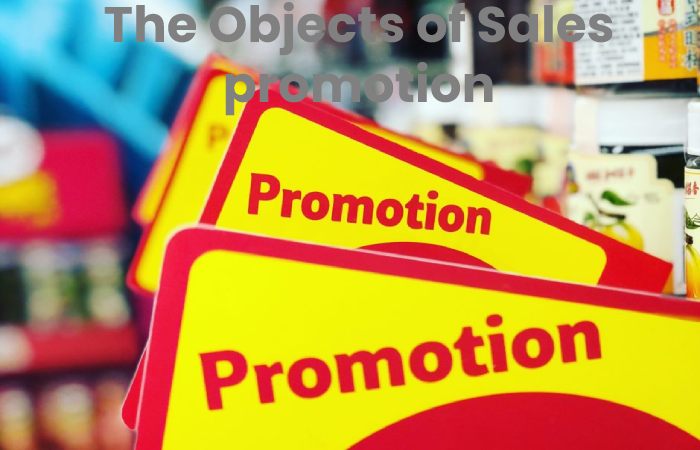
The Objects of Sales promotionThe Objects of Sales promotion

The main objects of promotion at the company level are:

  • Clear stock
  • Motivate the sales team
  • Get more cash in the short term
  • Significantly increases turnover

The Main Objects Of Promotion At The Market Level Are:

  • Differentiate yourself from the competition
  • Make it challenging to compare prices
  • Entry of new products
  • Increase the habit through consumption
  • Capture undecided consumers

The Main Objectives Of Promotion at the Distribution Level are:

  • Liquidate perishable (little sold) or declining products
  • Speed ​​up inventory turnover
  • Improve the image with distributors
  • I keep the broadcast
  • Be present at the point of sale
  • Clear dealer stock

Motivation and Direct Involvement Of The Distributor

The characteristics of sales promotion.

The definition of sales promotion and the comparison with the rest of the elements of the communication mix makes it possible to highlight that the interesting characteristics before the promotion to highlight:

The purpose of sales promotion is to increase sellers, distributors, and traders’ ability and desire to sell the company’s products and create a desire among potential customers to buy it “by bringing together the products of them.”

Sales promotion is a discontinuous incentive in time, form, and character. Each time it starts, it should be a sporadic, time-limited action. It does not prevent the repetition of a successful promotion.

Promotion Remains Used To Generate Court Sales.

It constitutes an inducement unrelated to the intrinsic characteristics of the product. It’s not about improving your outcomes, more about driving sales. If, for example, the packaging remains enhanced for promotional purposes, it is no longer a promotion since the packaging is one of the attributes or qualities of the product.

Promotion is an independent inducement to advertise. Motivator and informant you can come. Instead of that, promotion involves immediate sale. The confusion is that most promotional actions have to remain communicated, and advertising remains used for it. I publicized it “bringing” the customer closer to the product; The PV “brings” the product closer to the customer.

Promotion is an incentive that will get people in shape. It covers different actions in the specific jacket; It can be a gift, a discount, or participation in a raffle.

Is must establish a relationship between the promotional and the product and between the promotional and the customer. For example, if you are unsuccessful in promoting toothpaste, a suitable promotional coupon would be a toothbrush or dental floss.

The advantages of the promotion are as follows:

It makes it possible to counterbalance the differences in price or discounts compared to other competitors.

It increases sales vertically in the short term, and in a long time, it gives them stability.

You can control your results, and your results are required.

It allows eliminating surplus production or reduction of stocks.

It manages to capture, even temporarily, part of the market share of competitors.

The Main disadvantages of promotion are:

The customer will be able to focus on the benefit of the initiative that produced it.

Who needs a constant increase in the value of the gift sent to customers due to promotional struggles with the competition.

There is a risk that the customer will get used to the promotion.

Effectiveness Of Sales Promotion

In the end, the promotion is neither good nor bad. It can be effective or efficient as long as it achieves or does not the intended objectives. The main thing to consider to set these goals is the advantages and disadvantages that have just been reported.

Disclaimer: At Web Tech Galaxy, never encourage or endorse illegitimate websites through this platform. Too, piracy remains measured as a criminal crime under the Indian Copyright Act 1957. And similarly, our primary purpose with this content is to provide our readers with informative content. However, we recommend our users refrain from such expensive acts and keep watching movies in theatres.

Also read:

Best South Indian Movies Dubbed In Hindi You Must Watch

Related searches:

[types of sales promotion]
[list the objectives of sales promotion]
[definition of sales promotion by different authors]
[tools of sales promotion]
[sales promotion techniques]
[sales promotion objectives examples]
[sales promotion pdf]
[introduction sales promotion]

The Ten Most Common Product Promotions

0

1. Discount Marked by the Product Itself

It consists of temporarily selling at a lower price than normal, communicating it on the packaging itself: “10% discount”. Product Promotions

Strategy: It’s the type of advertisement that has the most direct impact

on the consumer.

where there are few quality differences between competing brands.

the company, premiere of the new container, etc.

For the consumer, getting the same is excellent business

Product for less money. It enables the company to grow

Product turnover at the point of sale. By achieving a lower profitability, its duration must be

be limited.2. Higher Product Content for the Same Price

Two types of modalities can be given here. On the one pointer, the classic 3 × 2 promotion (buy three units of product and pay only two). Second, a larger and more contained container, offered at the same price as the normal product labels (“20% more, free”).

Strategy: Recommended for articles of frequent ingesting, little differentiated and very modest. It is also very useful for presenting new larger packages. Its objective is to conquer market share from the competition and then maintain that share with the usual creation.

For the distributor, it is an ugly promotion, as it is not able to dispose of the stock of the normal product. Like the previous one, it is not convenient for it to have an excessive duration.

3. Complementary products at a Lower Price

Like the previous two, this is a third type of price raise. In this modality, the offer contains of offering two products for complementary use (milk + pastries, asparagus + mayonnaise, etc.) at a price lower than that corresponding to the amount of both.

Strategy: This raise is widely companies that manufacture both types of products. In this way the respective brand is strengthen. It is also very useful for introducing a new product or packaging.

4. Coupons or Discount Vouchers

They are price reductions through vouchers and coupons, which receive in different ways: by mail, in magazines, personal delivery, etc. They usually have a certain period of validity.

Strategy: It has a great commercial efficiency. The drawbacks: its high cost of distribution and the little sympathy shown by the channels, given the procedures involved (collection by its staff and reimbursement of the discount by the manufacturer).

5. Samples and Tastings

The sample is the free distribution of small quantities of product for the consumer to try. They can be got by mail, door to door, included in other products, etc.

Strategy: Very suitable for articles that have a differentiated component that must be verified: toothpastes, food, soaps, cosmetics, etc.

6. Direct Gifts

Gifts attached to the package or inside the product.

Strategy: Recommend for products with a low unit price, whose purchase is made frequently. The gift should never have a higher appeal than the product itself. It is optional that they do not lengthen excessively over time.

Being a very popular type of promotion, the gift must have a certain creative touch to differentiate itself from the competition.

7. Deferred Gifts

The gift is obtained by accumulating a series of proofs of purchase: labels, barcodes, accumulative points according to the capacity of acquisitions, etc.

Strategy: It is typically very effective as the attainment of the prize is linked to the realization of a certain volume of purchase.

8. Promotional Sweepstakes and Contests

Draws are games or combinations in which a prize is offer to randomly designated winners. Contests, for their part, require a certain active participation of the consumer, who has to put their knowledge and skills to the test of various kinds. In both cases, prizes of a certain entity are usually award.

Strategy: The ritual aspect of the sweepstakes (their advertising, the act of publishing the winners, etc.) causes a mimicry effect on the public. This is the reason for the fact that many non-regular consumers join the brand.

Regarding promotions through contests, experts consider that the lively aspect and, in some cases, the spectacular countryside of this modality produces a strong identification of the consumer with the brand. Product Promotions

9. Promotional Parties

Organization of parties in which the main character is a certain brand, which is the lone one of its kind that is spent during the celebration. In addition, t-shirts, caps and other advertising gifts relate to the product to promote away.

Strategy: The type of game and cartoon actions that are developed must be consistent with the audience that you are trying to overcome.

10. Joint Actions

In recent months combined promotion campaigns have become fashionable. Two brands participate in them, with similar marketing objectives and target audiences. Product Promotions

Strategy: An advantage is that the costs of the promotion are share among the participating brands. This allows them to publicize this process in a big way.

Also Read : When and how to use Discounts and Promotions?

Stages of Technological Evolution

0

Technological Evolution : A few years ago, not many, let’s say about 5 million years ago, the man had his entire body covered in hair. Then he lost it (although not in all cases), but in any case, the man found a way to protect his needs, and to avoid the cold, he covered himself with the skins of the animals that he hunted to eat.

Later, he discovered that vegetable fibers could shelter him and invented clothing. He got tired of going barefoot and developed shoes, he got tired of yelling, and he created the telephone. They got tired of red-hot his fingers (and eyelashes) with rushes. He invented the electric light, got tired of counting by hand, and developed the calculator and the computer.

As we know, technology productions objects to improve our excellence of life in all aspects. And what’s more, these technological innovations seem to emerge at a very high rate, think if not how quickly your computer will become obsolete only months later.

Technological Evolution goes hand in hand with Science, although both are different:

·        Scientific discoveries encompass knowledge itself.

·        The technology applies this knowledge to solve a human need.

The Prehistory.

It is the period elapsed from the appearance of the first human being to the invention of writing more than 5,000 years ago.

Their technological advances were gear towards their survival.

Prehistory is divide into three stages; Paleolithic, Mesolithic, and Neolithic.

The first technological revolution occurred about 10,000 years ago, in the Neolithic, when human beings went from being nomads to sedentary, developing the first agricultural techniques.

Key Discovery: Agriculture

We call prehistory the period that elapsed from the appearance of the first hominids to the formation of the first written documents Technological Evolution

The Ancient Age (3 000 BC – 5th century AD).

In Mesopotamia, the Sumerians invented cuneiform writing (around 3,000 BC), and in Egypt, Imhotep introduced natural stone into buildings.

At this time, the city-states appear in Greece and the territorial empires (Rome).

The Greek contributions were more scientific and philosophical, while the Romans were more dedicated to civil and military engineering.

At the end of this period, technological development declines, historians attribute it to slavery. Slaves are cheap labor, so it is unnecessary to produce innovations that facilitate manual and repetitive tasks.

The Middle Ages (5th century AD-1492).

The Western Roman Empire fell definitively in the 5th century due to barbarian invasions.

In the East, the Arabs are the heirs of classical culture, which they will be in charge of reintroducing in Europe. In similar, from 2,000 BC to the 15th period in China, they built a prosperous society that produced endless technological successes.

San Alberto Magno, Ramón Llull, Roger Bacon, and Jabir ibn Hayyan (Geber), the doctors Avicenna and Averroes, and the mathematician Al-Karayi stand out from this period.

In Europe, there was an intellectual resurgence with the creation of universities and cathedral schools from the eleventh century.

At this time, many inventions appear. Three technological novelties stand out from the rest: paper, printing, and dust.

The Modern Age (1492 – 1789).

It is the period between the discovery of America and the French Revolution.

In this period, the great geographical discoveries such as the discovery of America, the Renaissance, the Protestant Reformation, and the Counter-Reformation stand out.

With the development of cities, there was a change in the economic scheme: the outdated economy gave way to the first signs of the capitalist system.

This activity led to the need to seek new lands to get the raw materials necessary to manufacture the products. In addition, it meant the opening of new marketplaces where to sell them.

At this time, many inventions appear. Three technological novelties stand out from the rest: the compass, cartography, and firearms.

Fundamental discovery: The galleon

The Industrial Revolution (1760 – 1840).

The first industrial revolution was born in England in the 18th century with the invention of the steam engine. For the first time, People could perform agrarian or industrial tasks without the effort of people or animals.

This invention led to large-scale agriculture and the development of businesses.

Also Read: Best drones in 2021